Neurofeedback and Whole Brain Training
A New Path to Healing
Brain training with neurofeedback may be the answer you’re searching for.
What is
Neurofeedback?
Sometimes talk therapy isn’t enough.
Neurofeedback is biofeedback of the brain. This real-time feedback reflects your brain’s electrical activity back to itself, using rewards and inhibits it to teach the brain how to self-correct.
You can improve how you think, feel, and function when you support healthier brainwave activity by utilizing this innovative whole-brain training approach.
How Can
Neurofeedback
Help Me?
Stress comes in many forms – emotional, physical, and mental. Stress can be caused by environmental exposures, trauma, relationships, financial difficulties, head injury, chronic illness, and nutritional deficiencies, among others.
When you encounter stress, your brain does its best to adapt and blunt the effects of the stress. Your brain adapts by shifting its energy distribution pattern. These shifts come with both advantages and challenges.

How Does Neurofeedback Work?

Sit Back And Relax
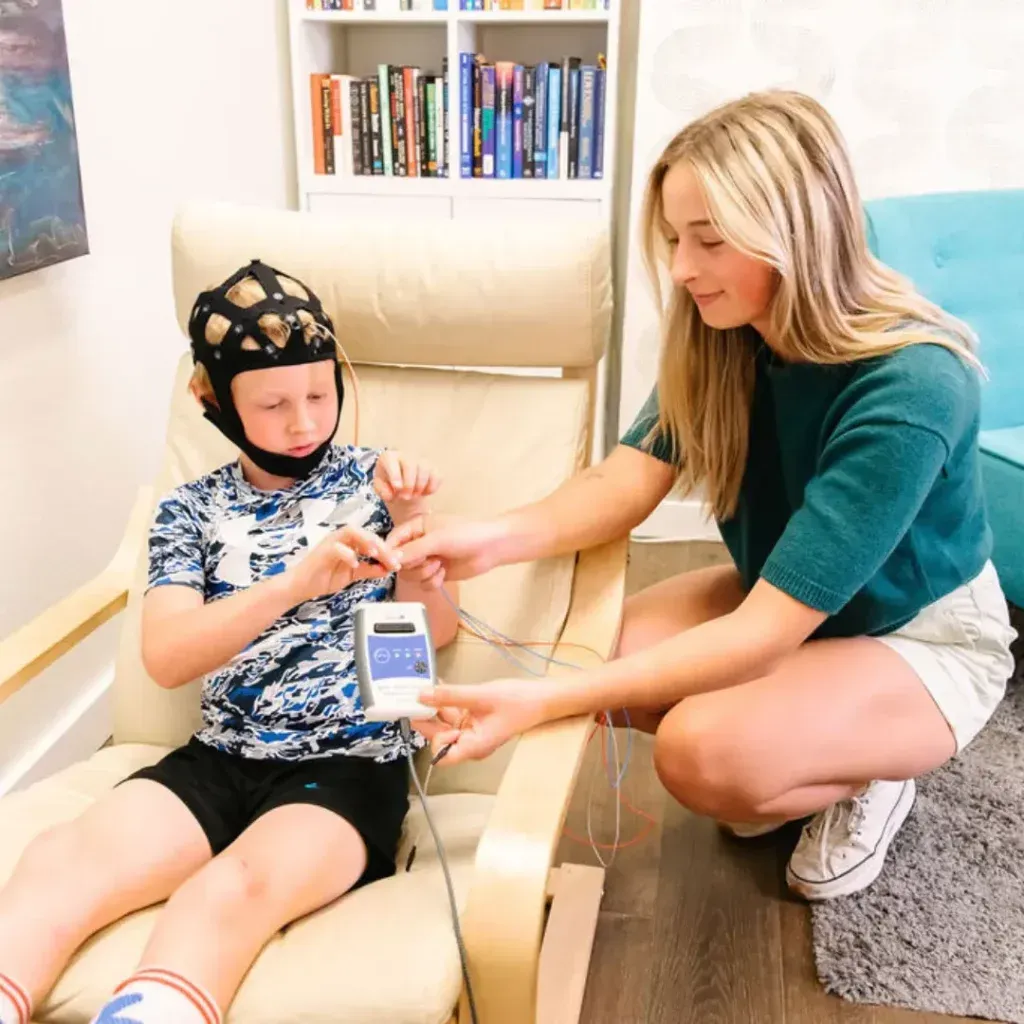
You just need to sit back, relax and notice the feedback.
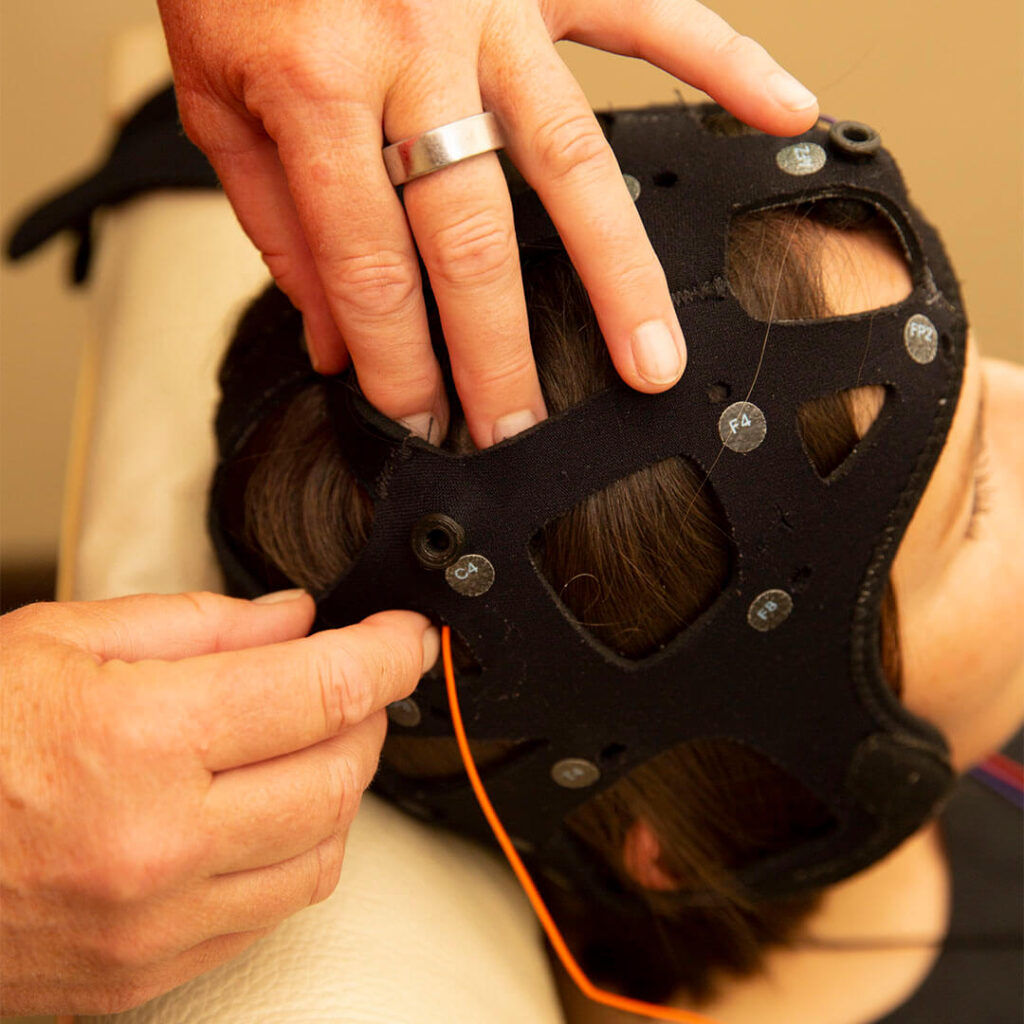
Your brain activity is measured and monitored in real time with sensors placed in our salt water cap, placed on your head.
Don't Think, Don't Try
Neurofeedback doesn’t require you to actively process your thoughts and feelings. Instead, it works with the subconscious electrical activity of your brain using feedback that comes through audio and visual cues. All of this happens while you watch Netflix or listen to music.

Notice Your Brain Changes
Expect to feel deeply relaxed during your neurofeedback training sessions. As your brain practices these new healthier patterns, you’ll notice better stress management, improved resilience, and long-term positive changes.
Consider neurofeedback if you're
interested in something that is:
Drug-free
Gentle and Relaxing
Non-invasive
Neurofeedback is shown to reduce
symptoms associated with:

Anxiety
Depression
Stress
Fear & Anger
Insomia
Cognitive Decline
Chronic Fatigue
ADHD, Focus & Attention
PSTD & Trauma
Brain Fog
Memory
OCD
Racing Thoughts
Headaches & Migraines
Head Injury
Sensory Processing
Bed Wetting
Tics & Tremors
Fibromyalgia
Tinnitus
And More...
Frequently Asked Questions
Can brain training with neurofeedback help me?
Neurofeedback brain training can benefit everyone, but it works best when you are committed to yourself and the process.
We find the most important factor for success is your desire for change and how consistently you attend your training sessions.
If you have a specific concern, it’s best to schedule a free consultation to discuss your specific needs and goals.
Brain training is much like physical fitness. You don’t get results overnight, and “getting your brain in shape” doesn’t happen after a single session. It is a process, and when you put in the effort, you will experience results.
What types of problems can neurofeedback help with?
Neurofeedback helps improve self-regulation, nervous system flexibility and stress management. This can lead to improvements with many types of symptoms including things like: anxiety, fear, depression, ADHD, cognitive decline, insomnia, headaches, body tension, sensory processing, tics, PTSD, brain fog, and more.
Does brain training with neurofeedback help with symptoms related to PTSD?
Yes. One of the main benefits of neurofeedback and Alpha/Theta training (a key part of the whole brain training process) is better nervous system regulation.
When the nervous system can get out of being stuck in fight or flight or freeze states, healing can happen.
A good book we recommend to anyone with PTSD is The Body Keeps the Score by Bessel Van de Kolk. Neurofeedback gets a prominent mention in his work.
Is neurofeedback only for people with significant mental, emotional, or health problems?
No. Neurofeedback benefits everyone. It’s a process that helps a person optimize their brain function.
Many high performers (like special forces soldiers, professional athletes, CEOs, etc.) use neurofeedback to sharpen their skills, increase their creativity, access higher states of consciousness, improve their relationships, deepen their meditative practices and improve their ability to be in a “flow” state.
You do not need to have “problems” to benefit from neurofeedback… just a desire to increase your potential.
Do you see clients outside of the Idaho area?
Yes, clients outside of the Treasure Valley can participate in our Home Training Program
Are the results of neurofeedback brain training permanent?
Yes, they can be, and also, it depends. Many people do experience significant and lasting changes from the brain training process. Once the brain learns a new skill, it tends to remember it. It is important that you do enough sessions for your brain to learn the new skills and then integrate and retain the changes.
There are choices, situations, and other things that can dysregulate your brain and cause new problems.
Potential causes of dysregulation can include: getting a concussion, choosing to eat a poor diet, excessively drinking alcohol, using marijuana, living in a moldy house, choosing to stay in a bad relationship or stressful job, etc.
Is brain training with neurofeedback a medical treatment?
No. Brain training is brain exercise to benefit the brain, much like physical exercise benefits the body.
Neurofeedback is a powerful, non-invasive brain exercise process that can help your brain break habit loops by getting direct feedback in real-time. With this information, your brain has an opportunity to learn a new way of relating to itself.
The energy pattern of your brain is how different brain frequencies relate to each other, and it is created by your accumulated experiences.
If you wanted to run a marathon, you wouldn’t just jog a few times and then successfully run a 26-mile race. The effort you put in determines the results, and it takes time, practice, and repetition to “get in shape”.
You may benefit from a coach providing feedback about your running form and technique to improve your performance, much like your brain can benefit from feedback.
Your brain can learn new skills and new options for responding to stress. It can also improve the overall rhythm and timing of its function.
The great thing about brain training versus physical exercise is that you can retain the changes even after you stop doing neurofeedback sessions.
Is neurofeedback painless, and is it safe?
Yes, Neurofeedback is painless and non-invasive. It is simply offering the brain an opportunity to learn new and healthier patterns of activity.
Neurofeedback is an intensive brain exercise session, and you may experience some fatigue afterward. This usually resolves after the first few weeks of training as your brain gets accustomed to the workout.
It’s important to always share your feedback and what you notice from your training session with your trainer. Rarely a negative side effect may occur, such as agitation or irritability, and if this occurs, it’s not permanent and is an indication the protocol needs to be adjusted.

Still have questions?
Can't find the answer you're looking for? Send me a message and let's get it answered!
Testimonials
My 6 year old son who has never slept through the night is now sleeping all night! Amazing! He is also getting along better with his siblings and able to behave better at school. I am so glad we found neurofeedback!
Neurofeedback is like teaching your brain to ride a bike. Once you learn how to achieve the perfect balance, it is a skill that your brain never forgets.
If you're even possibly considering doing neurofeedback give it a shot! It has helped me so much. I now feel so much better than I did before. Katie takes the time to get to know you and explain the process and the science. Highly recommended!

Interested in
becoming a client?
A well-regulated brain is instinctively better at solving its own problems. Are you ready to help your brain work better?
If yes, contact me to schedule your free consultation to discover how brain training with neurofeedback can help you.

© 2026 Empowered Neurofeedback
All rights reserved. | Terms of Use | Privacy Policy
This is a Paragraph Font
This is a Paragraph Font
Contact
Address:
911 E Winding Creek Dr Suite 150 Eagle ID 83616
Email:
Telephone:
This is a Paragraph Font
This is a Paragraph Font
Subscribe To My Newsletter
This is a Paragraph Font